


Nissan Hybrid e-POWER
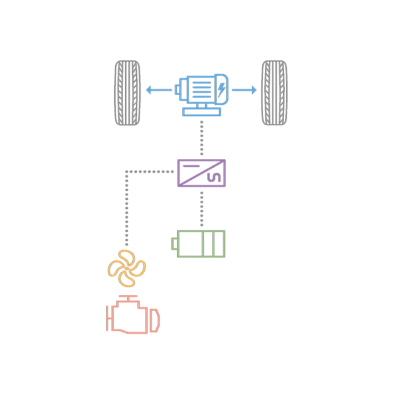
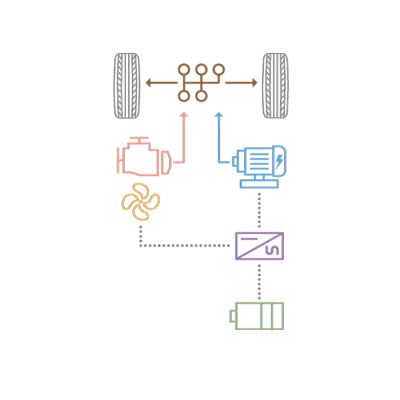
Hybrid e-POWER technology uses a high-output electric motor to exclusively drive the wheels, with the petrol engine generating the required electricity. The result is a smooth and responsive driving experience. This is different to a conventional hybrid, where the petrol engine and electric motor can both directly power the wheels.
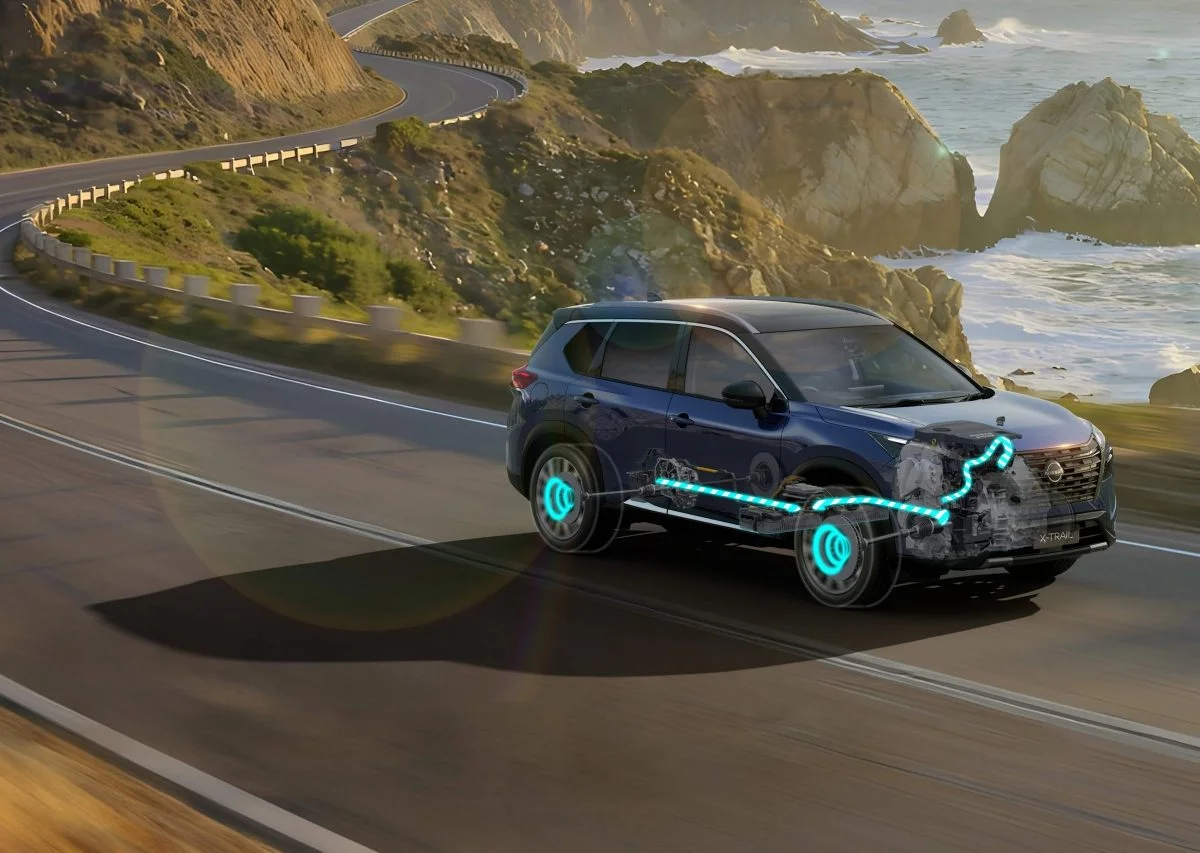
HOW DOES IT ALL WORK?

Driven by electric, fueled by petrol
Discover a new driving experience without changing your habits. Keep using fuel but enjoy a responsive EV-like driving experience.
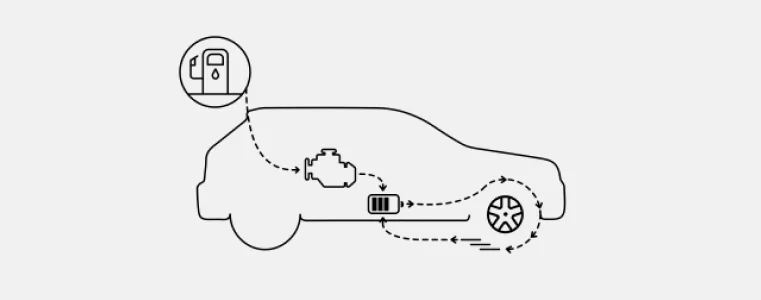
Recharges on the go
You don’t need to plug-in a Hybrid e-POWER vehicle. The petrol engine produces energy that charges the battery when the vehicle needs it. The petrol engine produces energy that can either be directly supplied to the electric motor or to recharge the battery. The electric motor alone drives the vehicle’s wheels.

Regenerative braking
Unlocked through Nissan’s e-Pedal Stepᵉᵖ², the regenerative braking system on Hybrid e-POWER converts kinetic energy from deceleration into electrical energy, and feeds it back to the battery.
Hybrid e-POWER explained

In daily driving, Hybrid e-POWER utilises an electric motor that is directly connected to the wheels, providing maximum torque from the start for low to mid-range speeds. When it needs charging, the fuel-powered engine generates electricity to charge the battery — powering an electric motor.

When the battery needs charging, Hybrid e-POWER vehicles do not need to be plugged in to charge. The fuel-powered engine only charges the battery and does not directly drive the wheels. The battery, in turn, powers the electric motor, allowing for a seamless and smooth drive.
Fuel consumption ep3 & CO2 emission ep3 details
| Fuel consumption (Litres/100km combined cycle)ep3 | CO2 emission (g/km combined cycle)ep3 | |
|---|---|---|
| Nissan X-TRAIL 4×4 Hybrid e-POWER | 6.1 | 139 |
| Nissan X-TRAIL 4×4 Petrol | 7.8 | 183 |
| Nissan X-TRAIL 4×2 Petrol | 7.4 | 174 |
| Fuel consumption (Litres/100km combined cycle)ep3 | CO2 emission (g/km combined cycle)ep3 | |
|---|---|---|
| Nissan QASHQAI (MY26) Hybrid e-POWER | 4.1 | 92 |
DOWNLOAD THE BROCHURE AND SPEC SHEET
How do Hybrid e-POWER, Conventional Hybrid & 100% Electric powertrains differ?
Hybrid e-POWER
Conventional Hybrid
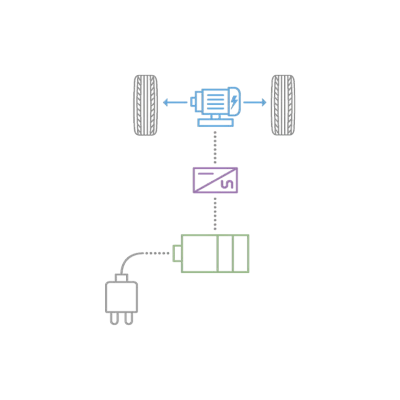
100% Electric

Transmission

Battery

Electric motor

Inverter

Generator

Combustion engine
| Hybrid e-POWER | CONVENTIONAL HYBRID | 100% ELECTRIC | |
|---|---|---|---|
| How it works | A combination of petrol engine which charges the battery and an electric motor that turns wheels | Powered by a combination of petrol engine and an electric motor | Entirely powered by an electric motor using a battery |
| What drives the wheels? | Electric motor | Petrol engine, electric motor or both. | Electric motor |
| How is the battery charged? | Charges while driving by the combustion engine and regenerative braking | Charges while driving by the combustion engine and regenerative braking | Must be plugged in to charge |
| Does it need petrol? | Yes | Yes | No |
| What is the driving experience? | Instant torque and a silent drive | Instant torque and a quieter drive | Instant torque and a silent drive |
All your questions answered
In the Nissan Hybrid e-POWER, the wheels are only ever provided power by the electric motor –and this electric motor is provided power by a combination of the VC-Turbo petrol engine and lithium ionbattery.
In an 100% electric vehicle, the motor driving the wheels is only provided power by a large lithium ionbattery, which you have to plug in to charge. With a fully electric vehicle you experience zero emissions while driving.
In a traditional hybrid vehicle, power can be provided to the wheels by the engine, the electric motor or a combination of the both. The battery that provides power to the motor is recharged by the engine.
As power is provided to the wheels in different ways, depending on the powertrain, the way the vehicle drives will vary. Hybrid e-POWER gives the feeling of driving an electric vehicle, without the need to plug in.
The components that make up the Hybrid e-POWER powertrain consists of:
– An Electric motor that drives the wheels
– A Lithium-Ion battery which powers the electric motor
– An internal combustion engine which generates energy for the battery and electric motor
– A Power Generator which converts mechanical energy to electrical energy
– An Inverter which manages the energy recieved from the engine to charge the Lithium-Ion battery and/or power the electric motor
Thanks to some clever technology, your Hybrid e-POWER vehicle will automatically activate the internal combustion engine when the charge level of the Lithium-Ion battery drops below a certain level.
You can check on the status of the Hybrid e-POWER powertrain via the energy flow diagram in the vehicle’s combimeter which will display when the engine is activated, the battery charging state and more
Hybrid e-POWER is available with e-4ORCE all wheel drive technology for X-TRAIL.
Hybrid e-POWER uses a smaller lithium-ion battery compared to a standard Nissan 100% electric vehicle.